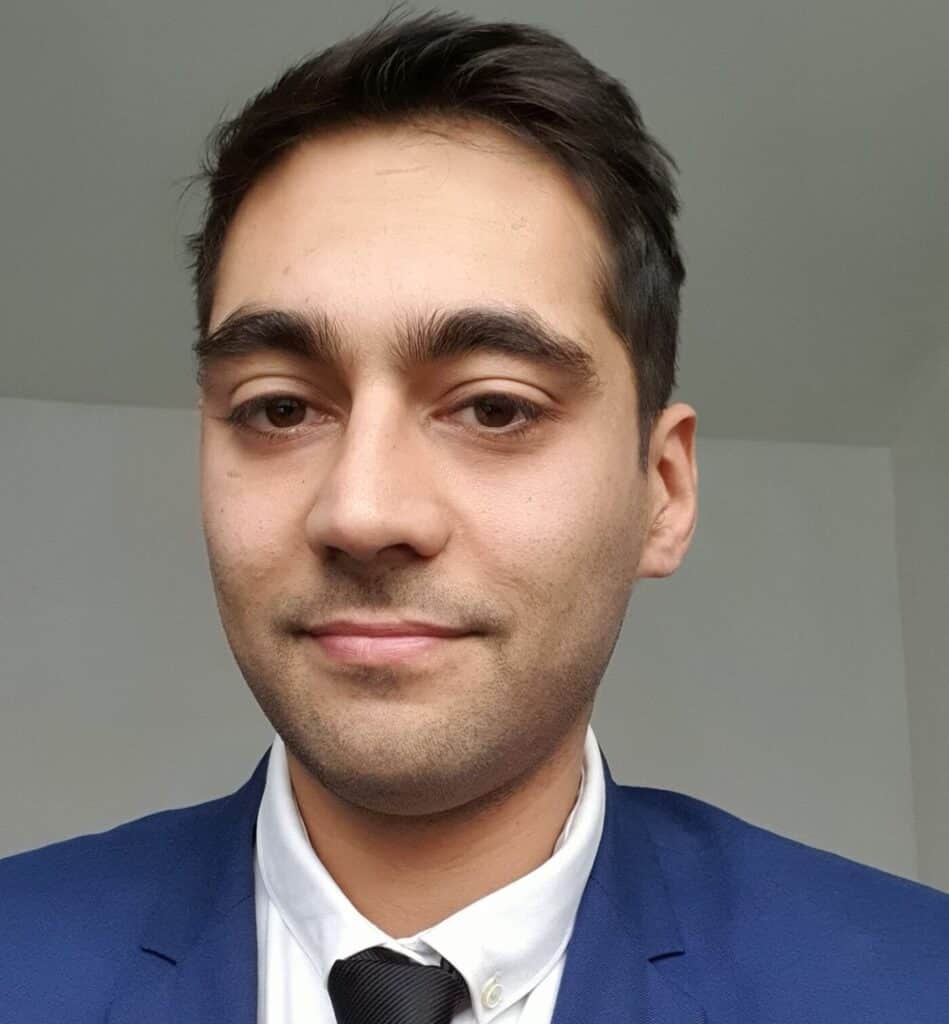
Dr Balal’s fellowship, awarded in 2025, supports the development of KERAFound, an AI foundation model designed to improve the early diagnosis and monitoring of keratoconus using anterior eye scans.
Most recently, the team published a study on automated AI triage for keratoconus referrals, investigating how AI could help predict which patients are most likely to progress and require treatment.
We spoke to Dr Balal about the progress made since receiving the fellowship, the potential impact on patients and clinicians, and what comes next for the research.
For people unfamiliar with keratoconus, what is the condition and why is early diagnosis and monitoring so important?
Keratoconus is a condition affecting the cornea, the clear front surface of the eye, which causes progressive distortion of vision. Dr Balal explains that if the condition is diagnosed too late, patients can develop scarring and may eventually require corneal transplant surgery.
“Keratonconus still is the number one reason for a full thickness corneal transplant in the Western world,” he said.
The condition mainly affects young working-age patients and can significantly impact quality of life, education and employment.
As a corneal specialist at Moorfields, Dr Balal regularly sees patients whose disease was detected too late. “You often see young patients that come in and end up with quite bad disease that has not been picked up or managed for a long time,” he said.
“If we diagnose it early, then we can give patients preventative treatment called cross-linking, which can halt the disease from getting worse.”
At Moorfields alone, around 8,000 keratoconus patients are monitored every year, with long waiting times in some areas creating delays to diagnosis and treatment. Dr Balal believes AI tools could help clinicians diagnose the condition earlier, automate monitoring pathways and reduce pressure on specialist clinics.
How is AI being used to improve keratoconus care?
Since receiving the NIHR Doctoral Fellowship in 2025, Dr Balal and collaborators have been developing AI tools designed to support different stages of the keratoconus pathway, from earlier diagnosis through to automated monitoring and treatment triage.
Over the past year, the team has published several studies exploring how AI could improve keratoconus care.
One study focused on improving how clinicians detect disease progression using corneal scans, helping make monitoring more accurate and reliable.
Another investigated whether AI could identify the earliest signs of keratoconus using eye scans, helping detect the condition before vision becomes seriously affected.
Most recently, the team published a study investigating whether AI could predict which keratoconus patients are most likely to progress and require treatment.
Dr Balal explained that currently, all keratoconus patients are monitored every six to 12 months because clinicians cannot reliably predict who will worsen over time. However, only around one in five patients will progress. “If we can predict who that one in five will be, then we can potentially treat them early.”
The latest study demonstrated the potential for AI-enabled triage systems to identify higher-risk patients earlier, while allowing lower-risk patients to be safely monitored through virtual or community pathways.
How could AI improve the patient pathway?
Dr Balal believes these AI tools could help reduce waiting times, improve access to care and ease pressure on specialist clinics.
“At the moment, in a lot of places in the country, the waiting time is long,” he said. “It could be 44 weeks in some places to see a corneal specialist to obtain a diagnosis. And in that time, the disease worsens and patients can lose vision.”
He believes AI-supported pathways could help clinicians diagnose the condition earlier and prioritise patients most at risk of progression.
“If we can get AI tools to automate the diagnosis process and even pick up cases earlier than normal, then that would help patients,” he said.
Dr Balal also highlighted the potential for more community-based care in the future, where scans could be captured locally and processed digitally. “More and more opticians now have these OCT (Optical Coherence Tomography) scanning machines available,” he explained. “So they can acquire the scans and then it can all be processed digitally on a cloud.” This could reduce the number of patients needing frequent hospital appointments, helping free up clinic space and clinician time.
“Instead of waiting months and months for their diagnosis or appointment, patients could potentially be seen within weeks where they just need a scan and then the AI does everything,”
He said
What impact has the NIHR Doctoral Fellowship had on your development as a clinician-scientist? her research?
The fellowship has also supported Dr Balal’s development as a clinician-scientist through specialist training, international presentations and PhD research.
“It’s given me funding for specialist courses, opportunities to go abroad and present my research. It’s also supported my PhD training in terms of developing skills in coding my own AI algorithms.”
Looking ahead, what still needs to happen before these AI tools can be integrated into routine patient care?
The next phase of the research will focus on testing the technology further to make sure it is safe and works well, as well as going through the necessary regulatory approvals before it can be used in everyday clinical care.
“We need to get this approved as a medical device,” Dr Balal said. “Once you get it approved, then we can go forward and take this into the clinic.”
With this progress in mind, Dr Balal is hopeful that AI-supported keratoconus pathways could begin reaching clinics within the next couple of years.