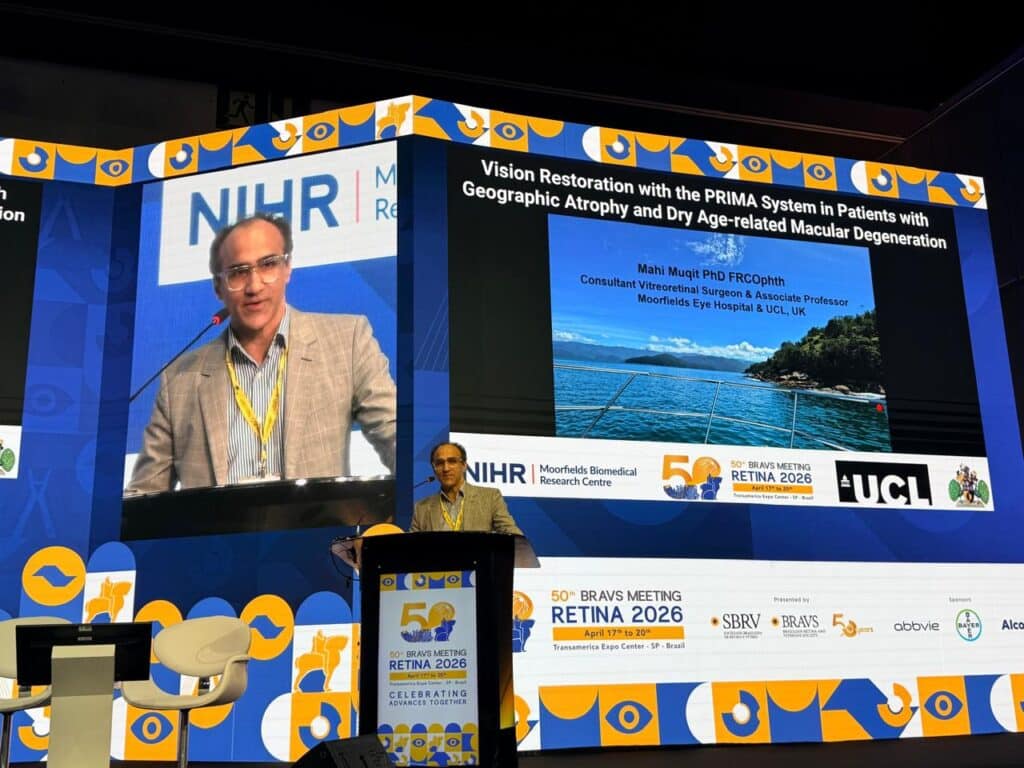
What first sparked Mahi’s interest in research?
Mahis’ research story began at the end of medical school. He travelled to The Gambia to work on a clinical trial for trachoma, then the leading infectious cause of blindness worldwide. He spent months doing fieldwork with children, working alongside an ophthalmologist on an antibiotic trial. Being based at the Medical Research Council (MRC) unit there and surrounded by vaccine trials and global health work opened his eyes to how versatile ophthalmology was and could be.
The experience in the Gambia led to his first publication and illustrated that research could take him anywhere. From there, he kept picking up small projects during his medical training, learning the mechanics of research step by step.
How did Mahi make the leap into more formal research?
The first grant awarded to Mahi was a British Ophthalmic Surveillance Unit study (BOSU) funded by Cancer Research UK. It focused on ocular sebaceous carcinoma, a rare disease.
BOSU studies are brilliant for trainees, they teach how to write ethics applications, design protocols, and run studies properly.
He empathised
That experience overlapped with the start of his PhD, which centred on then new technology – the PASCAL scanning laser. He spent three years at Manchester Royal Eye Hospital working on diabetic retinopathy, running small clinical trials and exploring emerging imaging tools like Optical Coherence Tomography, autofluorescence, multispectral imaging, and retinal oximetry.
Realising the possibilities these tools presented and then making that possibility real with the companies who made them was a great collaborative process for Mahi. Industry really listening and responding to clinicians was important for the benefit of patients.
The team published work that redefined how laser treatment was understood, after 30-40 years of little change in the field.
What drew him into global ophthalmology, especially the work in Bangladesh?
It happened almost by chance. At a conference, Mahi met a researcher from Johns Hopkins University who was working with Helen Keller International to set up a diabetic eye‑screening programme there. He’s originally from that region, so he approached the scientist and asked to support him. They were trying to build a screening system similar to the UK’s. Utilising nurses and non‑medical staff, they run ‘grading centres’ where images of the eye are examined to find eye conditions. It was a completely new model for the country.
He began travelling out regularly and his collaboration has lasted 15 years, with an invitation to a Global Diabetes Summit at the World Health Organisation in Geneva, and the pilot Bangladesh study published in JAMA Network Open, amongst many of his achievements during this pivotal research collaboration. He now continues his global health research with a rural Lions International dabetes project as a Visiting Professor in Bangladesh.
What have been his milestone and most recent successes?
For Mahi this was getting his first NIHR Research for Patient Benefit grant. It was for a national clinical trial on endophthalmitis, an infectious condition inside the eye. It took years of groundwork including a Cochrane review, public engagement, and patient involvement. Two patients even became co applicants on the grant.
Running that trial through the pandemic was incredibly challenging, but they met the endpoints and in May this year he learned the results will be published in one of the Nature Portfolio journals – which is a huge achievement.
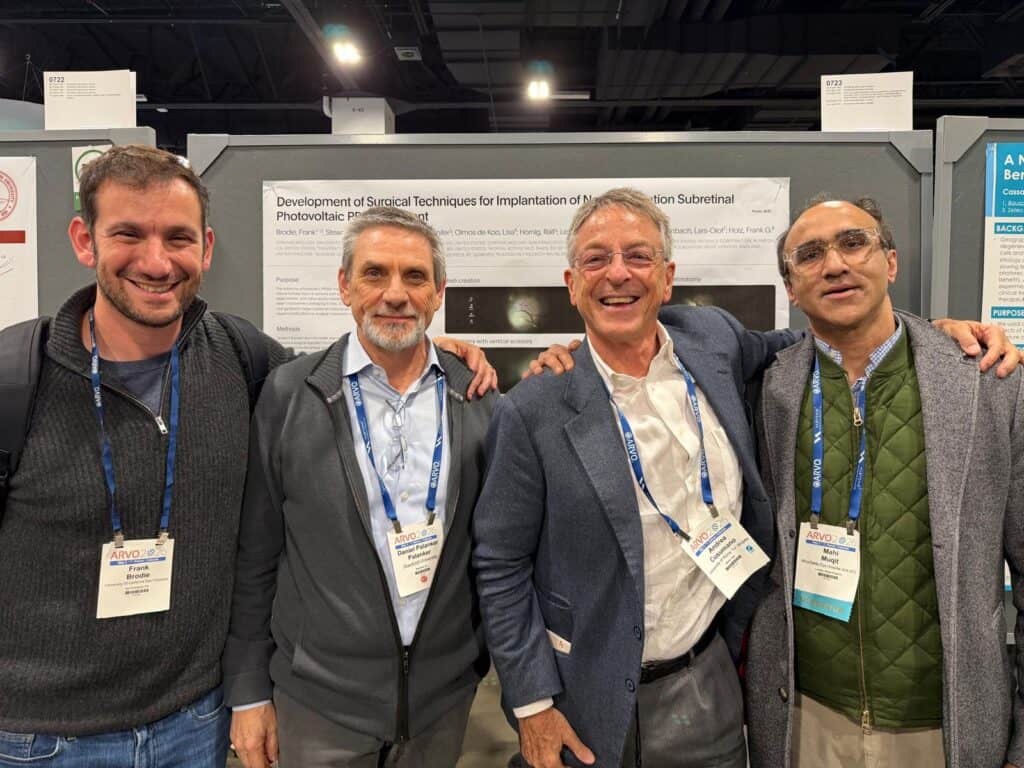
They’ve submitted another NIHR application for a Phase 3 international trial involving Mexico, Australia, and the UK. One research project really does lead to the next.
What are the biggest challenges in running clinical trials or global health projects?
Mahi believes that the big initial challenge is getting funding. Ophthalmology is a small specialty, so winning major grants is a challenge. His MRC Developmental Pathway Funding Scheme grant for a Phase 1 study took a long time to secure.
Once a trial is running, Mahi explains the challenge becomes the complexity. Coordinating a large team, managing safety events, and keeping patient experience at the centre. Every trial is different with Phase 1, 2, and 3 studies all having their own regulations. It’s an ongoing learning experience.
Global work has its own challenges. Institutions in some countries may not be used to research governance, but by maintaining high standards, it’s possible to deliver high‑quality, publishable work anywhere in the world.
How has the NIHR shaped his career?
Mahi says the NIHR “launched him into the world of clinical trials”. Its standards enable researchers to build strong teams, empower junior researchers, and widen opportunities. When people hear ‘NIHR’, they know the research is high‑quality and globally recognised.
It also helps to inspire fellows and trainees. Once they see how exciting clinical trials can be, they often want to get involved themselves.
How do patients and PPIE shape his research?
Mahi is grateful for the patient input into both his work and his applications for NIHR and MRC grants. He works by incorporating patient and public forums, surveys, and workshops. These patients help him shape research questions and trial design. When he and his team are recruiting for a trial, the participants often want to know that people with their condition were consulted and rightly so.
He ensures he works closely with organisations like the Macular Society and Retina UK, especially in his artificial retina project PRIMA.
He’s run international patient surveys, webinars, and awareness sessions.
Patients are incredibly engaged, especially when the research offers hope for conditions with no current treatment.
What advice would he give to early‑career clinicians and researchers?
Mahi advises the people get involved early and with small projects. Also to speak with established researchers; they always have a variety of projects in progress and need help.
He says to start small so you can see whether you enjoy research, then build up.
There are great opportunities within the Moorfields and UCL partnership: research fellowships, charity‑funded PhDs, and structured programmes at Moorfields and UCL. If you’re keen, people will help guide you.
What does the future of ophthalmic research look like, where do you fit in?
For Mahi, the future is about smart use of imaging and data. When planning a clinical trial, one of the first questions he asks is, ‘Do we have enough patients with this condition?’
Working with the data team, he has found that there are systems that can look through image databases containing OCTs and fundus photos. The systems can identify potential eligible trial patients. This is especially important for rare or advanced conditions, like those needed for artificial retina trials.
This means that when a trial is ready to launch, the size of the potential patient pool is already known. Although there is no contact them until a trial is approved, but it does mean they can be made aware if study is feasible.
Mahi predicts that targeted, data‑driven approaches will transform how trials are designed and delivered.
Any final thoughts?
For the first time, blind patients with dry AMD can have meaningful vision restored through the PRIMA neurostimulation device. Mahi is excited about where the future of research will lead.