A flagship UCL200 event has brought together researchers and clinicians from across UCL to explore the challenges, opportunities and priorities to shape the future of eye research and innovation.
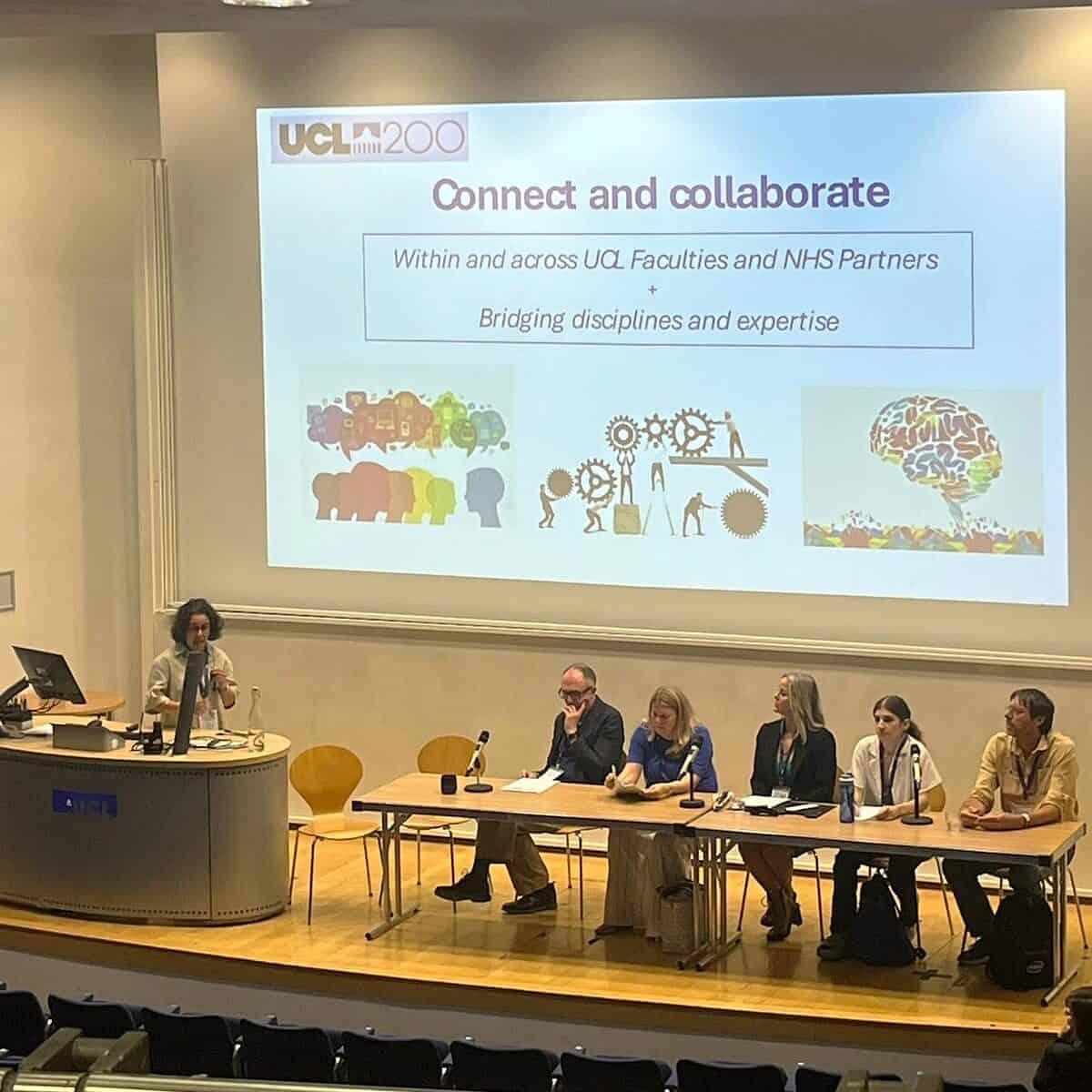
Held at the UCL Institute of Child Health and supported by our BRC, the Centre for Sight Summit provided the space for a multidisciplinary audience, including those with lived experience, to share insights and knowledge. The goal was to facilitate collaborations between faculties and institutes to maximise skills and expertise from across the University.
The morning began with welcome comments from Prof. Ibrahim Abubakar, Vice Provost (Health), followed by an introduction to the aims and purpose of the Centre for Sight from Prof. Andrew Dick and Prof. Jugnoo Rahi. They discussed the key aim to brings together different disciplines and perspectives to improve awareness, improve eye care and increase support for people with visual impairments.
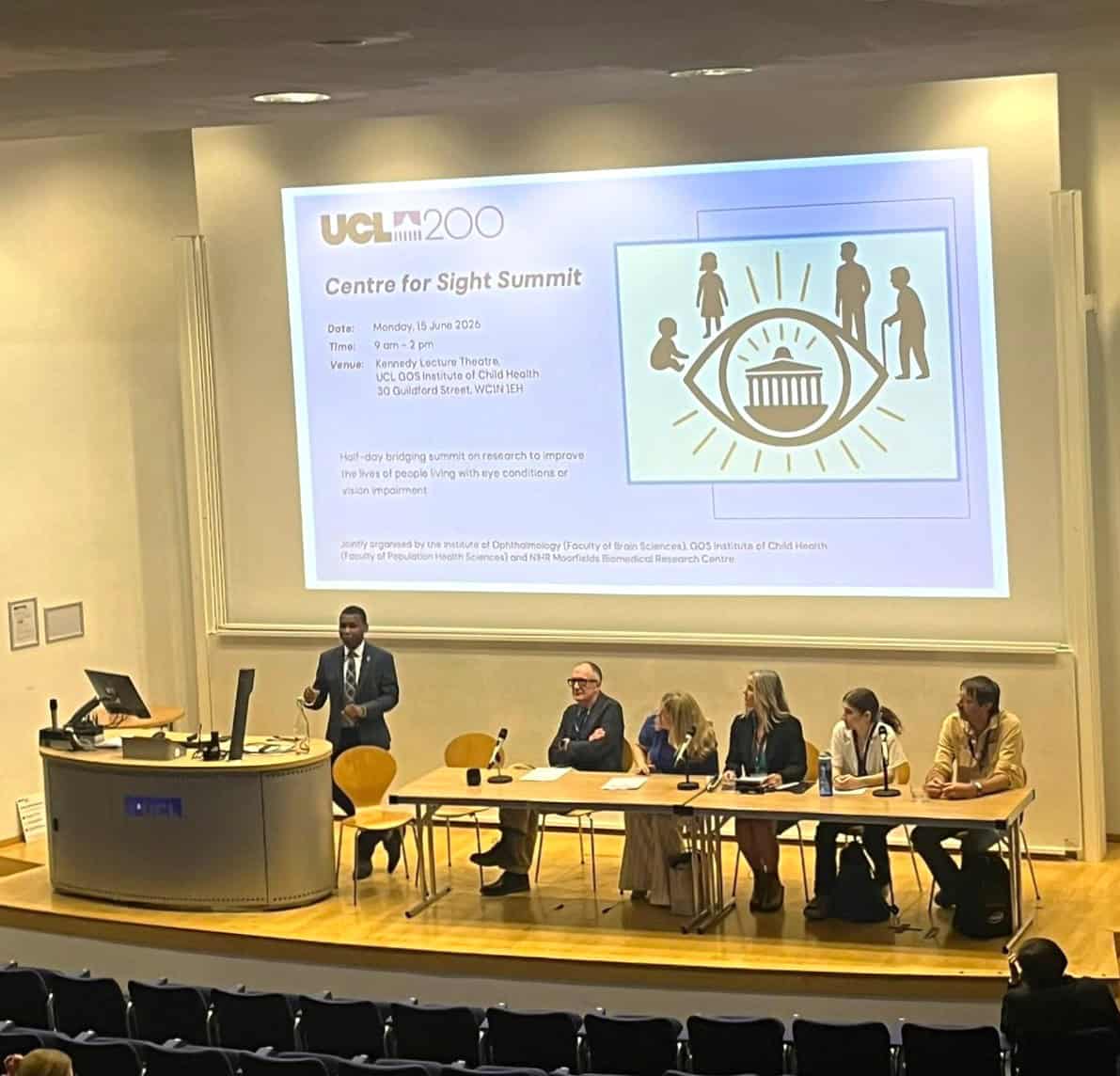
Dr Helen Baker, our Patient and Public Involvement and Engagement Lead, led a panel discussion on the findings from a previous ‘listening event’, where she shared themes and priorities identified by people with lived experience of visual impairment. This included contributions from patient representatives Natasha, Michelle and David, who shared reflections from their age groups on the challenges faced across education, independence, employment, accessibility, mental health and daily life.

Natasha from the younger age group highlighted that visual impairment is not only a visual issue, but something that affects every aspect of life. She spoke about the impact on education, independence and quality of life, particularly for teenagers in a world that is largely designed for people who are sighted. She also talked about the challenges parents face in balancing concerns for safety with supporting their children to develop independence and explore the world around them.
She highlighted the importance of early recognition, better advocacy and improved signposting to support, including access to services, financial assistance and guidance when someone receives a diagnosis or experiences their vision deteriorating. She also spoke about the need for greater recognition of the mental health impact of living with a sight condition.
Michelle from the mid age group shared insights into the barriers people with visual impairment can face in education, employment and public spaces. She highlighted the need for improved teacher training and greater awareness of visual impairments from an early age, which would create more inclusive environments for children and young people into adulthood.
She discussed the challenges of employment, reporting that lower employment rates are often linked to misconceptions about visual impairment rather than a lack of skills or ability. She emphasised that employment is linked to dignity, independence and inclusion which is ultimately better for the country as a whole.
Michelle also talked about how physical environments can create barriers, with public spaces often not designed to suit visually impaired people. She raised the importance of better customer services training and accessible building design. She also spoke on the challenges created by electric vehicles which can cause safety issues for visually impaired pedestrians.
Mental health and wellbeing were also key themes in this age group, with descriptions of experiences of anxiety, loneliness, fatigue, worry and the constant effort required to navigate different environments. She highlighted the importance of wellbeing support for those recently diagnosed.
David, who represented the older age group discussed the many different experiences of people with visual impairment. He spoke about there being no single experience of sight loss. He discussed the impact on hobbies, independence and access to technology, particularly where digital tools are not accessible or used by the older generations leading to feelings of isolation.
He also highlighted the impact of urban infrastructure and transport systems, explaining how poor design can lead to barriers and lower confidence when outside the home. He described the frustration of being unable to complete daily tasks easily and the importance of familiar, accessible environments that support independence.
Following the lived experience presentations, participants took part in breakout discussions exploring five key themes:
- Education and learning environments
- Employment and economic inclusion & public policy and law
- Built environment and public spaces
- Mental health and social connection
- Computational health
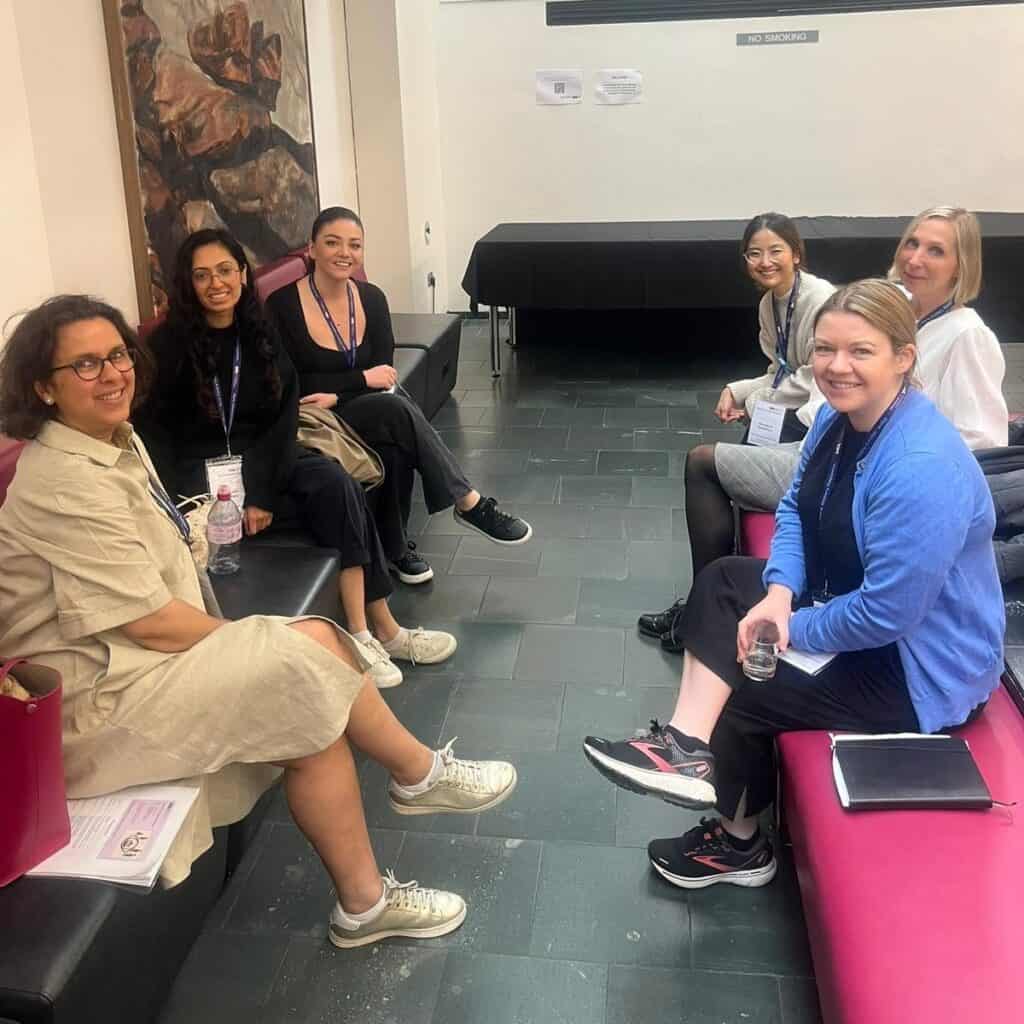
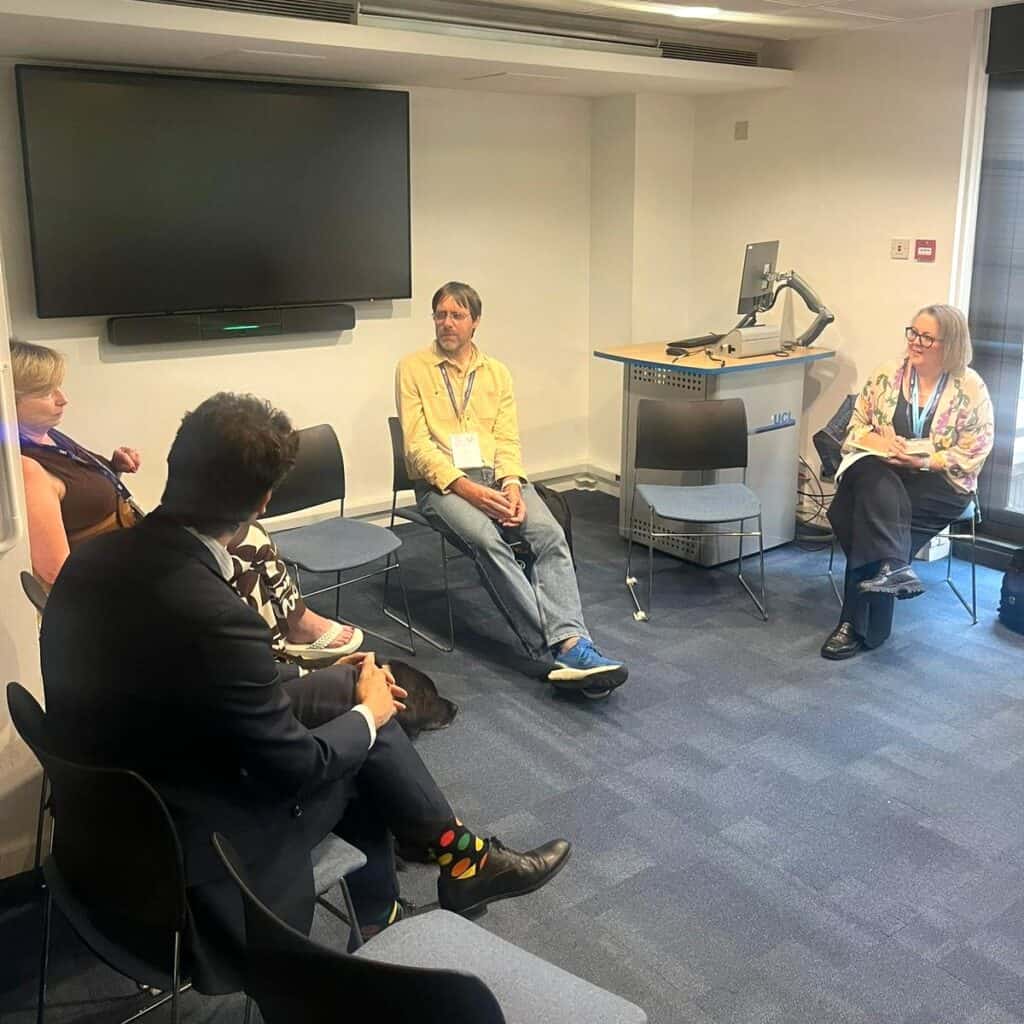
The sessions encouraged participants to identify key challenges, explore potential solutions and consider opportunities for research, collaboration and policy change.
The discussions led to a diverse range of insights, with attendees sharing thoughts around solutions involving collaborations and potential projects. Groups then reported back on their key challenges and proposals, highlighting common priorities and opportunities for future work.
The event demonstrated the value of bringing together different disciplines to shape research priorities, policy and ensure that future work reflects the realities of living with visual impairment.
A detailed report will be developed and shared in the future.
Closing reflections were provided by Professor Alan Thompson, Dean of the Faculty of Brain Sciences, followed by a networking lunch with Professor Michael Spence, President and Provost, providing further opportunities for discussion and collaboration.