India ranks second only to China in the prevalence of diabetes, with 74 million people affected, of whom about 40 million remain undiagnosed. Diabetic retinopathy (DR) is an eye condition caused by damage to the blood vessels in the retina. Early detection and timely treatment are critical to saving sight. Since India lacks screening programmes, individuals with diabetes often receive treatment only after they experience vision loss and seek eye care.
Dr. Sobha Sivaprasad from Moorfields Eye Hospital led the ORNATE-India study, a multidisciplinary research initiative funded by the Global Challenges Research Fund and UKRI, to address diabetes-related blindness in India. This project has generated over 90 peer review publications to date.
Screening in Local Clinics
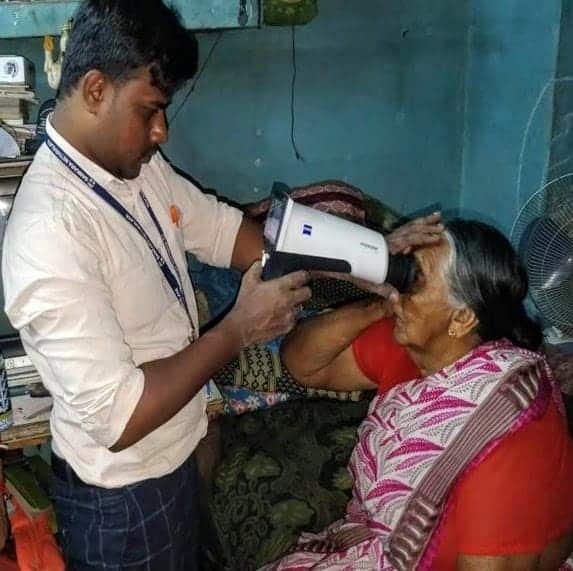
In partnership with the Government of Kerala, ORNATE-India demonstrated that diabetic eye disease can be screened at the primary care level. Nurses, trained to use portable, cost-effective fundus cameras with pupil dilation, were able to capture retinal images. Kerala’s government has since expanded this approach statewide.
How common is diabetic retinopathy?
The study found that 12.5% of individuals aged 40 and older with diabetes had diabetic retinopathy, and 4.0% had sight-threatening DR.
How do diabetes diagnosis and socioeconomic factors interplay?
DR prevalence was higher at 15.5% in individuals already diagnosed with diabetes compared to 8.0% in those undiagnosed. States with low social and economic development had a lower prevalence (11.2%) of DR in diagnosed individuals, approximately 7% less than in other areas. High blood sugar emerged as the most significant modifiable risk factor.
Potential Screening Tool
Measurable through a simple blood test Cystatin C level may identify individuals at risk of sight-threatening DR, enabling targeted retinal screening.
The ORNATE-India study is changing India’s health policies and guidelines by providing safe, affordable screening alternatives. The adoption of these methods by the Kerala government highlights the powerful impact of international collaboration while showcasing a model that could play a pivotal role in reducing the global burden of diabetic retinopathy.
For more information, visit ORNATE-India’s website.