At our latest Coffee Hour, we welcomed Ruke Ejegreh, an internationally trained Optometrist and an MSc Public Health candidate at York St John University, London Campus. In this guest blog, Julia Muraszczuk, an Health Hub Support Officer at Friends of Moorfields, reflects on the talk and shares her key takeaways.
Ever since the Coffee Hour events launched, I have made a point of attending whenever I can. They have become something I genuinely look forward to because I always come away having learnt something new.
What I enjoy most is how accessible the talks are. Researchers explain their work in a way that is easy to understand, and each session feels more like a conversation than a formal lecture, with plenty of opportunities to ask questions.

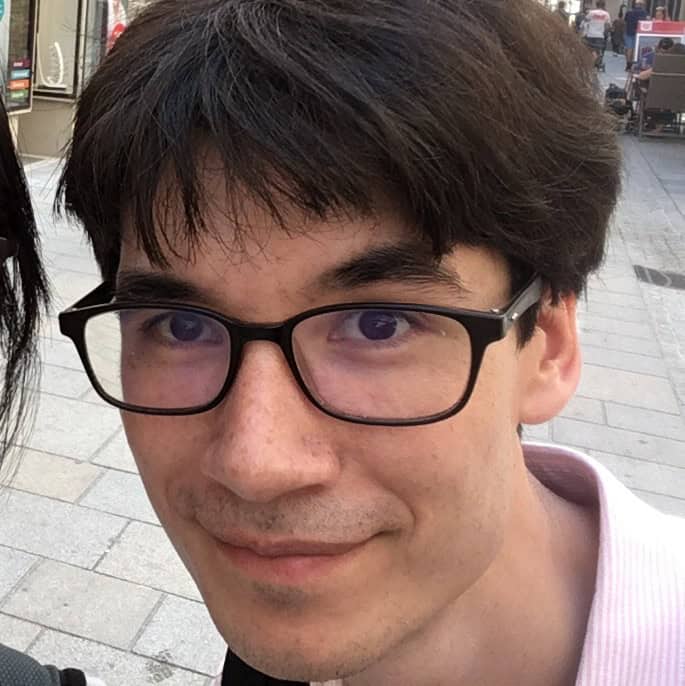
Photograph (from left): Julia Muraszczuk and Ruke Ejegreh
The latest Coffee Hour, held on 8 July 2026, was especially memorable to me because the speaker was Ruke Ejegreh, one of our Friends of Moorfields volunteers. Ruke presented her research findings on glaucoma trends and risk factors among adults aged 40 and over in the UK.
Working as an Eye Clinic Liaison Officer, I have seen first-hand the impact glaucoma can have on people’s lives and appreciate the growing public health challenge it presents. With an estimated 1.1 million people now living with glaucoma in the UK, many of whom remain undiagnosed, Ruke’s talk deepened my understanding of why this condition, described as the ‘silent thief of sight’, often goes unnoticed until significant vision loss has occurred.
One of the ideas that resonated with me most from the talk was the concept of the ‘glaucoma risk backpack’. I found this analogy particularly effective because it illustrated how risk accumulates over a lifetime. As Ruke explained, everyone carries a different backpack containing a unique combination of risk factors. While some, such as age, family history, and ethnicity, are beyond our control, others are added through health conditions, lifestyle, and environmental exposures. I was particularly interested to learn about the potential role of ambient air pollution in increasing glaucoma risk, as this was new to me.
The analogy left me reflecting on the fact that glaucoma is rarely caused by a single factor. Instead, risk builds gradually, with each factor contributing to the overall burden an individual carries. It also highlighted that each person’s level of risk is shaped not only by biological influences but also by the wider social and environmental circumstances in which they live.
In turn, I found myself returning to a question I had considered before: if we understand the risk factors for glaucoma and have eye care services across the UK, why do so many people still remain undiagnosed?
Ruke’s discussion of the ‘unequal sight test’ and ‘detection gap’ helped bring greater clarity to this. The challenge is not simply about understanding who is at risk; it is also about ensuring everyone has the same opportunity for that risk to be recognised. Access to sight tests, follow-up care, and referral pathways can vary depending on factors such as awareness, socioeconomic circumstances, and where people live. These differences can influence who is reached, who engages with eye care, and who receives a timely diagnosis and treatment.
One of the key messages I took away from Ruke’s talk was that glaucoma awareness and risk assessment should not begin only when someone reaches their 40s. A lifelong approach is needed, where we recognise risk factors from an early age, encourage regular eye care, and help people understand the importance of looking after their sight throughout life. With an ageing population and glaucoma cases expected to rise, this message has never felt more important.
So, what can we do here and now? Start with something simple—book your sight test if you’re due and encourage your friends and family to do the same.
Coming up next in our Coffee Hour series, Dr Alasdair Warwick and colleagues will explore how researchers are using genetics to advance our understanding of three of the leading causes of sight loss.
Date: Thursday 8th October 2026
Time: 3 – 4 pm
Location: Coffee Junction, 42 Provost Street, London N1 7SU
(a 5-minute walk from Moorfields Eye Hospital)